International medical care coordination in India
+91 98212 12615[email protected]
InMedism - International Medical Tourism Search Request assistance
Network Excellence pathway

Robotic Spinal Surgeries in India

Understand how InMedism may coordinate specialist review, hospital access and medical travel around this pathway—without replacing clinical advice.

Patient-focused overview

Understanding Robotic Spinal Surgeries

Robotic or navigation tools may assist implant positioning or planning in selected spine operations; they do not determine whether surgery is needed or replace the spine surgeon.

Computer-assisted surgical systems can support pre-operative planning, navigation and surgeon-controlled minimally invasive procedures. The system does not operate independently: the trained surgeon controls the instruments and remains responsible for the operation.

For an international patient, useful coordination begins with complete and current information. InMedism can help route the case to a relevant hospital department, organize non-clinical communication and align practical travel arrangements after the provider indicates an appropriate next step.

The hospital and treating clinicians remain responsible for examination, diagnosis, informed consent, clinical eligibility, treatment choice, risks, expected benefits and follow-up. Technology, specialists and programme availability differ between hospitals and may change.

Urgent symptoms require local emergency care.

Do not delay immediate assessment while waiting for an international opinion or travel coordination.


How the technology is used

What robotic assistance means in this pathway

Robotic spine surgery uses surgeon-controlled planning, navigation or guidance technology to support selected steps of an operation, commonly trajectory planning and placement of spinal implants. The robot does not diagnose the condition, decide whether surgery is needed or operate independently.

Cases where a specialist may consider it

  • Selected spinal fusion and instrumentation procedures
  • Spinal deformity correction requiring carefully planned implant trajectories
  • Revision surgery or anatomy where navigation may assist orientation
  • Minimally invasive spine procedures in an appropriately equipped programme
Procedure-specific assessment

Evaluation before deciding

  • Neurological and musculoskeletal examination that agrees with current imaging
  • MRI and/or CT images suitable for operative and navigation planning
  • Assessment of instability, deformity, nerve compression and bone quality
  • Review of non-surgical care, previous spine operations and implanted hardware
  • Anaesthesia fitness, infection risk and realistic functional goals
Alternatives

Approaches to compare

  • Conventional open spine surgery
  • Minimally invasive surgery using fluoroscopy or navigation
  • Robot-assisted navigation and instrumentation
  • Non-operative management when there is no urgent surgical indication
Technology limitations

Questions beyond the word “robotic”

  • Robotic assistance is a surgical tool, not an autonomous surgeon
  • It does not make an unnecessary operation appropriate
  • Registration, imaging or equipment limitations may require another technique
  • Conversion to a conventional or open approach may be necessary
  • Benefits depend on the procedure, anatomy, team experience and patient condition
Recovery and travel

Plan beyond hospital discharge

  • Hospital stay depends on the operation rather than the robot alone
  • Pain control, wound care, mobility and neurological monitoring guide discharge
  • Physiotherapy and lifting or bending restrictions may be required
  • Return flights require explicit clearance because immobility can increase travel risk
  • Follow-up imaging and rehabilitation should be arranged before returning home
Cost planning

What can change the hospital estimate

A reliable quotation requires review of the diagnosis, imaging and exact operative plan. A generic online price cannot represent every case.

  • Exact operation and number of spinal levels
  • Implants, screws, rods, cages or biologic materials required
  • Robotic/navigation platform and intraoperative imaging
  • Operating time, ICU need and expected hospital stay
  • Rehabilitation and management of complications or associated conditions
Clinical assessment

What the treating team may evaluate

  • Diagnosis, stage and reason surgery is being considered
  • Anatomy and findings on current imaging
  • Previous operations, radiation or other treatment
  • Fitness for anaesthesia and major medical conditions
  • Surgeon training, procedure volume and available platform
Options to compare

Care may involve more than one approach

  • Open surgery
  • Conventional laparoscopic or thoracoscopic surgery
  • Robot-assisted surgery when clinically appropriate
  • Non-surgical or interventional treatment where applicable
  • Observation or further diagnostic evaluation
Prepare for review

Information the hospital may request

  • Diagnosis, symptom timeline and the clinical question to be answered
  • Recent consultation notes, discharge summaries and relevant test reports
  • Original imaging, pathology or procedure records when applicable
  • Previous treatment, operations, medicines, allergies and major conditions
  • Patient identity and travel information only through an approved secure process
Discuss before deciding

Questions for the treating specialist

  • What diagnosis is confirmed and what additional evaluation is needed?
  • Why is this option being considered and what alternatives are reasonable?
  • What patient-specific benefits, material risks and uncertainties apply?
  • What hospital stay, recovery, rehabilitation and follow-up are expected?
  • When could travel be safe and what support may be required after returning home?
Safety and limitations

Points to clarify before committing to travel

A preliminary opinion is a starting point. Examination, updated tests or multidisciplinary review may change the proposed plan.

  • The technology is a tool and does not replace surgical judgement.
  • A minimally invasive approach may still require conversion to open surgery.
  • Potential benefits and risks depend on the operation and the individual patient.
  • Ask what evidence supports the proposed approach for the specific condition.
  • Recovery and travel timing must be confirmed by the treating team.
Medical travel planning

Coordinate the clinical plan before fixing the journey.

Timelines differ by diagnosis and hospital. These practical steps help protect continuity and reduce avoidable uncertainty.

01

Before travel

Obtain the hospital’s current review, understand what remains provisional, confirm the responsible department and keep travel bookings flexible.

02

During treatment

Keep written records of the confirmed diagnosis, consent discussion, treatment delivered, medicines, warning signs and the responsible clinical contacts.

03

Before returning home

Ask the treating team to confirm fitness to travel, precautions, prescriptions, rehabilitation, follow-up schedule and an escalation route for complications.

Relevant doctors

Specialists related to Robotic Spinal Surgeries

Explore specialists whose published clinical focus relates to this treatment. Final selection depends on medical-record review, current hospital association and appointment availability.

Search all doctors →
Prof. (Col.) Dr. Bipin Walia - Neurosurgery, Neurosciences, Spine Surgery
Neurosurgery

Prof. (Col.) Dr. Bipin Walia

Chairman & Head – Neurosurgery & Neurospine

Neurosurgery, Neurosciences, Spine Surgery

Max Smart Super Speciality Hospital, Saket, New Delhi View verified profile →
Dr (Prof) Bhavuk Garg - Spine Surgeon
Orthopaedics

Dr (Prof) Bhavuk Garg

Principal Director & Head – Orthopaedics & Spine

Spine Surgery

Max Smart Super Speciality Hospital, Saket, New Delhi View verified profile →
Dr. Puneet Girdhar - Max Institute of Robotics and Minimal Invasive Spine Surgery - Ortho Spine, MIS & Robotic Spine Surgery
Spine Surgery

Dr. Puneet Girdhar

Chairman - Max Institute of Robotics and Minimal Invasive Spine Surgery - Ortho Spine, MIS & Robotic Spine Surgery

Max Institute of Robotics and Minimal Invasive Spine Surgery - Ortho Spine, MIS & Robotic Spine Surgery

BLK-Max Super Speciality Hospital, New Delhi View verified profile →
Neurosurgery

Dr. Rana Patir

Chairman - Neurosurgery & Gamma Knife

Neurosurgery | Neuro and Spine Surgery | Neurosurgery

Fortis Memorial Research Institute, Gurugram View verified profile →
Dr. Anil Kumar Kansal - Centre For Neurosciences, Minimally Invasive Neuro Spine Surgery, Neuro-endoscopy Surgery, Functional Neurosurgery, Back Pain Management
Neurosurgery

Dr. Anil Kumar Kansal

Vice Chairman & HOD - Neuro Surgery & Neuro Spine

Centre For Neurosciences, Minimally Invasive Neuro Spine Surgery, Neuro-endoscopy Surgery, Functional Neurosurgery, Back Pain Management

BLK-Max Super Speciality Hospital, New Delhi View verified profile →
Dr. V Anand Naik - ORTHO SPINE LIMB RECONSTRUCTION
Spine Surgery

Dr. V Anand Naik

Head Of Department

ORTHO SPINE LIMB RECONSTRUCTION

Paras Health, Gurugram View verified profile →
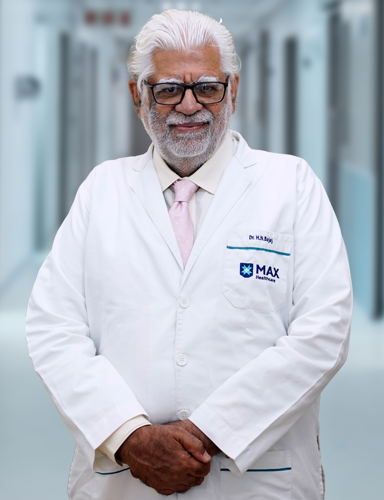
Dr. H.N. Bajaj - Orthopaedics & Joint Replacement, Arthroscopy & Sports Injury, Spine Surgery
Orthopaedics

Dr. H.N. Bajaj

Principal Director (Orthopaedics) & Head (Spine Surgery)

Orthopaedics & Joint Replacement, Arthroscopy & Sports Injury, Spine Surgery

Max Smart Super Speciality Hospital, Saket, New Delhi View verified profile →
Spine Surgery

Dr. Rahul Gupta -Neurosurgery

Senior Director & HOD Neuro and Spine Surgery

Neurosurgery | Neuro and Spine Surgery | Neurosurgery

Fortis Hospital, Noida View verified profile →

These profiles support specialist discovery and are not rankings, endorsements or confirmation that a doctor is appropriate for a particular patient.

Relevant hospitals

Hospitals associated with the displayed specialists

Each hospital appears because at least one eligible doctor displayed above is currently associated with it in the directory. This association does not by itself confirm that the hospital currently offers Robotic Spinal Surgeries, has particular equipment or is suitable for an individual case.

Explore the hospital directory →
Press Enclave Marg, Saket District Centre, New Delhi 110017, India

Max Smart Super Speciality Hospital, Saket, New Delhi

Max Smart Super Speciality Hospital, Saket is a tertiary-care hospital in South Delhi with multidisciplinary medical, surgical, transplant, cancer and robotic-surgery services.

Specialist association shown; current service availability not confirmed

Explore hospital profile →
Pusa Road, New Delhi, India

BLK-Max Super Speciality Hospital, New Delhi

BLK-Max Super Speciality Hospital in New Delhi provides multi-specialty care and dedicated services for patients travelling from outside India.

Specialist association shown; current service availability not confirmed

Explore hospital profile →
Gurugram, Haryana, India

Fortis Memorial Research Institute, Gurugram

Fortis Memorial Research Institute (FMRI) in Gurugram is a leading multi-specialty healthcare destination for patients seeking advanced medical treatment in India.

Specialist association shown; current service availability not confirmed

Explore hospital profile →
Sector 43, Gurugram, Haryana, India

Paras Health, Gurugram

Paras Health, Gurugram is listed in InMedism’s hospital directory for international patients considering specialist treatment in India.

Specialist association shown; current service availability not confirmed

Explore hospital profile →

Hospital cards are based on displayed specialist associations. They do not imply partnership, affiliation, agency, endorsement, authorization, guaranteed admission, procedure availability or individual suitability.

Editorial status

Updated 26 August 2026 by the InMedism Editorial Team for general patient education and coordination scope. This page is not individualized medical advice. No named medical reviewer is represented unless a licensed reviewer has actually completed and approved a review.

Contextual guidance

Questions patients often ask

These answers provide general coordination information. Questions about diagnosis, risks or treatment require a qualified clinician.

Ask a different question →
Is Robotic Spinal Surgeries suitable for every patient?

No. Suitability depends on the diagnosis, current health, previous treatment, available alternatives and assessment by the appropriately qualified treating team.

Can InMedism recommend or confirm this treatment?

InMedism coordinates access and communication. Only licensed clinicians and the treating hospital can diagnose, recommend treatment or confirm clinical suitability.

Can the treatment plan and cost be confirmed before travel?

A hospital may provide a preliminary opinion or estimate after reviewing sufficient records, but examination and additional tests may change the plan, timing or cost.

What should an international patient prepare?

Prepare a concise medical history, recent specialist notes, relevant reports and images, previous treatment details, current medicines and clear questions for the specialist.

Does robotic assistance perform Robotic Spinal Surgeries automatically?

No. The trained surgeon remains in control and responsible for the operation. Robotic or navigation technology may assist planning or selected technical steps.

Does robotic assistance guarantee a better result?

No. Outcomes depend on the diagnosis, procedure, patient factors, surgeon and team experience, rehabilitation and complications. No technology can guarantee an outcome.

Your next practical step

We will help identify the appropriate coordination route without asking you to make an uninformed commitment.

Confidential patient assistance

Tell us how we can help.

Share a brief enquiry for treatment, hospital, doctor and medical-travel coordination. Do not include passport details or medical files here.

This form is protected by CSRF validation, rate limiting and a spam trap. For emergencies, contact your nearest emergency service.

WhatsApp